


Update: On Friday, September 18, the U.S. Forest Service announced that it will conduct a 15-day comment period before signing off on a special use permit for Pitkin County to manage operations at the Maroon Bells Scenic Area. The Forest Service has not yet released a map or an acreage number for what the permit would cover.
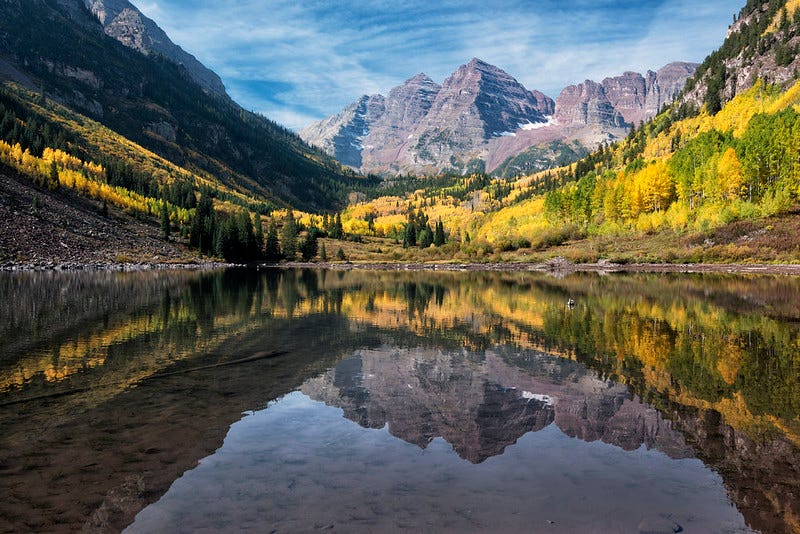
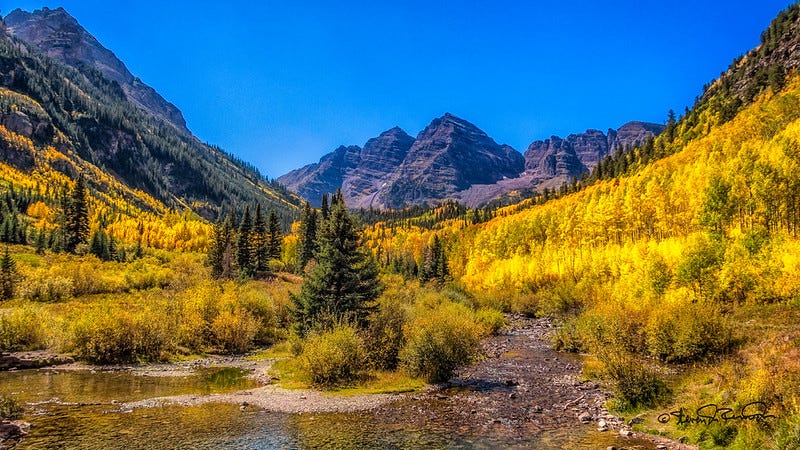
The Maroon Bells Scenic Area draws more than 200,000 visitors a year and is the gateway to the Maroon Bells-Snowmass Wilderness, one of Colorado’s original wilderness areas. In May of this year, Pitkin County applied for a special use permit to take over day-to-day management of Maroon Bells, starting with the 2027 season. The White River National Forest says it can no longer cover a roughly $300,000 annual shortfall at the site and has told the county to finalize an agreement by fall or it will turn to a private concessionaire instead.
To authorize the management change, the U.S. Forest Service plans to use a categorical exclusion: a legal shortcut that lets federal agencies skip the environmental review and public comment process required by the National Environmental Policy Act (NEPA) on decisions the government has already determined won’t significantly affect the environment. The rules governing that shortcut were rewritten last year to remove the public notice step that it previously included, meaning this management change could occur with no opportunity for public input.
Pitkin County has partnered with the Forest Service at the Maroon Bells for decades, and it’s stepping in because the federal government says it can no longer afford to manage the site at a $300,000 loss. The county, which is home to Aspen, undoubtedly has the knowledge, ability, and resources to manage the area responsibly for recreation and conservation, but the process still deserves scrutiny. The use of a categorical exclusion to bypass the NEPA process means the federal government is handing off management of a major recreation area to a local entity without thoroughly examining the potential environmental and social impacts and without providing the public that owns the land with a chance to share their concerns about the plan.
What even is a categorical exclusion?
As outlined in NEPA, categorical exclusions can be used for categories of activities when the government has determined that there would be “no significant impact” to the environment from the proposed activity covered by the categorical exclusion. Agencies can also adopt each other’s categorical exclusions. Previous administrations from both political parties have used both of these approaches for a variety of purposes.
But the second Trump administration is broadening the use of categorical exclusions, in many cases trying to use them as blanket exemptions from following the law at all, or greatly expanding the acreage to which they apply. To lay the groundwork for this approach, the White House Council on Environmental Quality (CEQ) repealed its implementing regulations for NEPA via a rule that was finalized in January 2026. Among other things, this repeal included removing the 30-day public comment period for proposed categorical exclusions. Essentially, the public will have to take the government at its word that the activities covered by the proposed categorical exclusion will have no significant impact on the environment and will have no opportunity to raise concerns or offer evidence that the activity would, in fact, have an impact on the environment.
In April 2026, following the rule repeal, CEQ issued new guidance on the use of categorical exclusions, framing its approach as “CE-first” and promoting categorical exclusions as “a core feature of NEPA” rather than a process to create defined and limited exceptions. CEQ chair Katherine Scarlett described the guidance as intended to “help agencies identify an off-ramp from unnecessary levels of environmental review” during the permitting process.
Following these policy changes, the Trump administration has wasted no time putting it into practice. For example, in August, the Bureau of Land Management finalized an exclusion for forest and woodland density management that raised the area covered from 70 acres to 5,000.
The exclusion the Forest Service intends to use at the Maroon Bells, USDA-29c-USFS, covers the “issuance of a new authorization or amendment of an existing authorization for recreation special uses that occur on existing roads or trails, in existing facilities, in existing recreation sites, or in areas where such activities are allowed.” The examples written into the rule are all small permits or contracts, including mountain bike permits on trails already open to bikes, backcountry ski guiding, a one-time event at an existing facility, and a concession contract to run a campground that was already operating. None of the examples include full management of one of the West’s most popular and iconic recreation areas.

Until last year, the Forest Service’s NEPA procedures put two checks on that shortcut: The agency had to notify the public before deciding an exclusion applied; scoping, its regulations said, “is required for all Forest Service proposed actions, including those that would appear to be categorically excluded.” And before using an exclusion, officials had to weigh a list of resource conditions that specifically named congressionally designated wilderness. In July 2025, the U.S. Department of Agriculture (USDA, the agency that houses the U.S. Forest Service) removed those procedures entirely, folding what survived into a single department-wide rule finalized this April. Whether a sensitive resource is enough to disqualify a project from the shortcut is now left to the responsible official’s sole discretion on a case-by-case basis.
Why this is wrong for Maroon Bells
The Maroon Bells agreement is wider-reaching than the permits that the categorical exclusion option was written for. The county’s ordinance authorizing the agreement says the Forest Service “has proposed issuing a Special Use Permit to authorize Pitkin County to assume responsibility for day-to-day operations, maintenance, visitor staffing, and natural resource stewardship at the Maroon Bells Scenic Area, while the federal government retains ultimate ownership and overarching regulatory oversight of the land.” The draft permit does not include an acreage number.
A concession contract to run a campground covers one campground, but this agreement covers operations, staffing, and resource stewardship seemingly across the entire scenic area. Professor Mark Squillace, who teaches natural resources law at the University of Colorado, made the same point in comments to the county and the Forest Service, saying that the exclusion “does not allow the wholesale transfer of management responsibility over the entire Maroon Bells Scenic Area.”
In 2024, the Forest Service proposed handing management of Sweetwater Lake, an 832-acre recreation area also within White River National Forest, to Colorado Parks and Wildlife. But for that transfer, the Forest Service announced it would prepare a full environmental impact statement, the most thorough review NEPA provides, and it ran a formal scoping process with public meetings and a comment period. That review is still underway. Sweetwater Lake received the most rigorous analysis available, while Maroon Bells would receive none.
The risk of this approach may land back on Pitkin County. The Forest Service is not required to produce any NEPA documentation for this category, so there will be no federal record explaining the decision. If the permit and lack of environmental review are challenged, the county’s operating plan, reservation system, and new fee structure would sit in limbo while challenges play out in court.
Pitkin County’s commissioners and Open Space department have been careful stewards and clearly want what is best for the Maroon Bells. But a public process protects everyone’s stake in the site regardless of who holds office in the county. And the implications for this type of shortcut carry far beyond one county.
Beyond Pitkin County
The entire reason for this management change is money. Years of budget and staffing shortfalls have left the Forest Service unable to keep up the restrooms, trails, campgrounds, and visitor services at the site. The remedy for this issue should be to properly fund the Forest Service. National public lands belong to all Americans, and it should not be up to local governments to decide how they operate and who can visit them, as CWP noted in a previous blog post about this issue.
Pitkin County has the third-highest per capita income in the United States and an open space program funded by a dedicated property tax through 2040. It is close to a best-case scenario for this kind of arrangement with the federal government. But the precedent it sets will not be limited to counties with the resources and political will to properly manage areas like Maroon Bells. If a categorical exclusion can alter the management of a landscape this prominent with no public process, the same shortcut is available at any underfunded site, in counties with fewer resources, less capacity to run an operation at this scale, and less commitment to managing it for recreation and conservation. If the first question for managing public lands is “does it turn a profit?” then counties may quickly turn to logging, mining, and drilling rather than responsible stewardship.
The Forest Service should complete an environmental analysis and open a public comment period before any permit is signed. Waiting for an environmental review is a smaller price than years of legal uncertainty at the Maroon Bells, and the next underfunded Forest Service site may not have a wealthy county willing to step up and take care of it.
The Maroon Bells belong to everyone, and the public has a right to be part of the decision about how it is managed.
For more information, visit westernpriorities.org. Sign up for Look West to get daily public lands and energy news sent to your inbox, or subscribe to our podcast, The Landscape.
Well done Lilly, - I write as someone who has spent a lifetime on America’s public lands — first as a young camper at Maroon Lake in the 1940s and ’50s, later as the Forest Ranger in Aspen, and eventually as Assistant Director of the Bureau of Land Management. I have seen the best of what our public lands represent: shared heritage, open access, and a commitment to stewardship that spans generations.
That is why I am deeply concerned by recent efforts to weaken, underfund, or privatize these irreplaceable places. The pattern is familiar to anyone who has worked inside the agencies: it begins with the iconic sites, the landscapes that define who we are as a nation. Once those are carved off or commercialized, the rest of the public estate becomes far easier to dismantle.
Chronic underfunding is part of the strategy. When agencies are starved of resources, they appear incompetent or ineffective, even when career staff are doing everything they can with what little they have. This creates political cover for transferring authority — and eventually ownership — away from the public and toward private interests. Some observers have raised concerns that current leadership is more focused on the desires of well connected private actors than on the public values these lands were meant to uphold. Readers should review reporting from reliable sources to understand the full context.
Public lands are not commodities. They are a trust — one that belongs to every American, not just those with the wealth or influence to profit from them. I have many fond memories from my decades of service, but I also know how quickly things can change when the commitment to public stewardship erodes.
We must remain vigilant. Once public lands are lost, they never return to the public.
Sincerely, Mike Penfold, Billings, Montana
This is not good