

Housing and conservation experts agree: Public lands can’t solve the housing crisis. Here’s what can
New partnership outlines how affordable housing development and conservation can coexist

For years, communities across the West have faced two intensifying, disparate challenges: a crippling housing affordability crisis and increasing political pressure to develop and privatize our nation’s public lands. Recently, lawmakers seeking to score political points have tried to combine these two issues into plans to sell off national public lands. But a groundbreaking new partnership is calling out these attempts for what they are: boondoggles meant to enrich housing developers, not bring down the cost of living.
In late April, a diverse coalition of national, regional, and local organizations from both the affordable housing and public land advocacy sectors unveiled the “Shared Ground” policy framework. This novel alliance is bringing together two historically separate communities to affirm that protecting national public lands and expanding access to affordable housing are complementary, not competing, priorities.
Bad faith proposals
This unified front comes at a critical time, as opportunistic politicians—including Interior Secretary Doug Burgum and U.S. Senator Mike Lee of Utah—are trying to weaponize the genuine need for affordable housing as an excuse to hand public lands to private developers. As Mark Allison, former chair of the National Low Income Housing Coalition and current executive director of New Mexico Wild, noted, the Shared Ground framework empowers advocates to “reject the transparent attempt by cynical politicians in D.C. to divide us through false choices.” The reality is that the housing crisis is fundamentally a policy and investment challenge, not the result of a simple shortage of land.
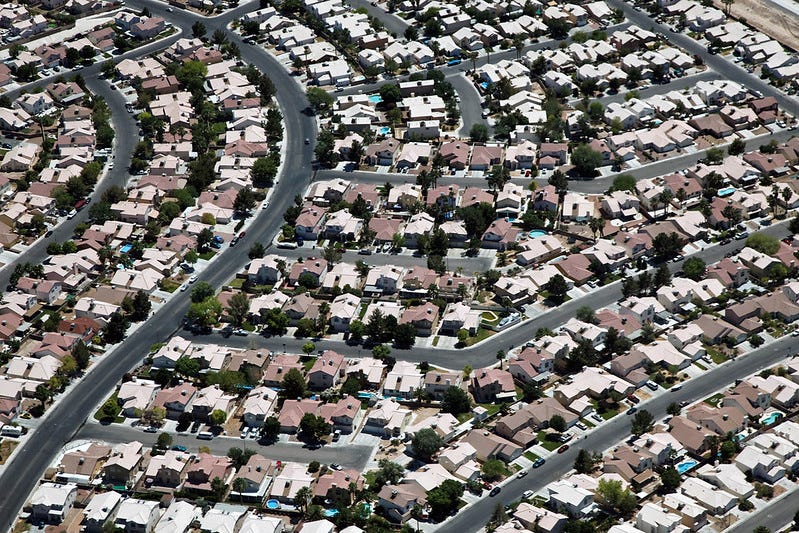
Bad-faith legislative proposals to sell off public land generally lack meaningful affordability guardrails. For example, Senator Lee’s HOUSES Act would allow local governments to nominate unlimited tracts of federal public land to be sold to developers. However, the bill contains no mention of rent or price restrictions, essentially creating an invitation to build suburban mansions and commercial hotels on public lands. Similarly, Nevada Governor Joe Lombardo recently demanded the transfer of 50,000 acres of public land around Las Vegas with seemingly no restrictions—a recipe for more suburban sprawl rather than affordable workforce housing. These liquidation proposals are thinly veiled attempts to enrich commercial developers while doing nothing to help everyday Americans.
Meanwhile, the Housing and Urban Development and Interior departments announced a joint task force in March 2025 to “identify underutilized federal lands suitable for residential development and streamline land transfer processes,” promising a report by April 15 of this year. In June 2025, BLM Acting Director Jon Raby said the BLM had “identified 535,000 acres that it manages within four miles of the municipal limits of towns with at least 5,000 residents,” promising a map that has yet to materialize. The task force also missed its April 15 report deadline, leaving public land and housing advocates in the dark about the federal government’s plans for our communities.
A proactive vision
The Shared Ground initiative rejects these false solutions, putting forward a proactive vision to increase affordable housing in the West. The coalition—which includes the National Low Income Housing Coalition and the National Coalition for the Homeless, along with the Wilderness Society and the Sierra Club—recognizes that communities thrive when they have both stable, affordable homes and abundant access to healthy, protected natural spaces. Once public lands are sold for development, they are permanently removed from public ownership, resulting in a loss of recreational access, wildlife habitat, and the long-term economic stability these lands provide.
To combat disingenuous land-grab efforts while still allowing public land to aid in the development of truly affordable housing, the joint framework outlines four core principles to guide future policy decisions involving housing and public lands:
1. Demonstrated public interest and community benefit:
Any proposal to use public land for housing must come with binding, legally enforceable requirements ensuring the land primarily serves the development of truly affordable housing, not market-rate or speculative development. The benefits must flow to local communities, not private developers or wealthy out-of-state residents looking to build trophy homes.
2. Careful inventory and prioritization:
Local governments and developers must prioritize already-developed sites, well-located surplus lands, and infill development and avoid undisturbed public land. Most federal public lands are simply too remote to be useful for workforce housing and lack the infrastructure required for viable, cost-effective development.
3. Ecological, cultural, recreational, and Tribal safeguards:
Public lands with significant ecological, cultural, historic, or recreational value must be explicitly excluded from any development proposals. Furthermore, any proposals must include meaningful, early consultation with Tribal Nations and transparent engagement with local communities.
4. Shared commitment to community solutions:
Both housing and public land advocates agree to support genuine housing solutions that meet demonstrated local needs while simultaneously safeguarding the natural resources that belong to everyone. Real, community-based housing solutions do exist. Proven strategies to address the housing affordability crisis include preserving existing affordable housing, implementing equitable zoning reforms to allow for increased density, improving tenant protections, and utilizing government financing tools to spur the development of truly affordable housing.
Already in action
There are a handful of projects currently underway that utilize public lands for housing and meet most of these criteria. In 2016, Summit County, Colorado purchased a nearly 45-acre parcel of public land from the U.S. Forest Service for $1.75 million, following the passage of the Lake Hill Administrative Site Affordable Housing Act. The project is set to be the largest workforce housing site in the county. The Dillon Ranger District Workforce Housing Administrative Site Lease, also located in Summit County, is a first-of-its-kind workforce housing project on land leased to Summit County by the Forest Service. Finally, the Southern Nevada Public Land Management Act of 1998 set up a mechanism that has allowed Las Vegas to grow onto nearby public land while supporting conservation programs and ensuring the protection and restoration of hundreds of thousands of acres of public land. Unfortunately, SNPLMA lacked meaningful affordability and density requirements and has led to extensive urban sprawl. The Biden administration tweaked the program in 2024 to incentivize truly affordable development on public lands sold under the law.
Ultimately, how we use our public lands is neither the primary cause of the housing affordability crisis nor its panacea. Treating it as such risks undermining both conservation and affordable housing goals. The Shared Ground framework provides a powerful vision based on livability, sustainability, and equity for lawmakers to draw on to develop real solutions for the affordable housing shortage in the West. It is a declaration that we can, and must, invest in affordable housing where it belongs, while keeping our shared public lands in public hands.
For more information, visit westernpriorities.org. Sign up for Look West to get daily public lands and energy news sent to your inbox, or subscribe to our podcast, The Landscape.
Thanks for the wonderful reporting and synopsis on this!
Wrote a feature story for The Guardian about the growing number of nomads that are utilizing public lands as a way to solve the affordable housing crisis back at home. Might be a nice companion to this piece! :)
https://www.theguardian.com/us-news/2026/may/05/van-life-quartzsite-arizona