


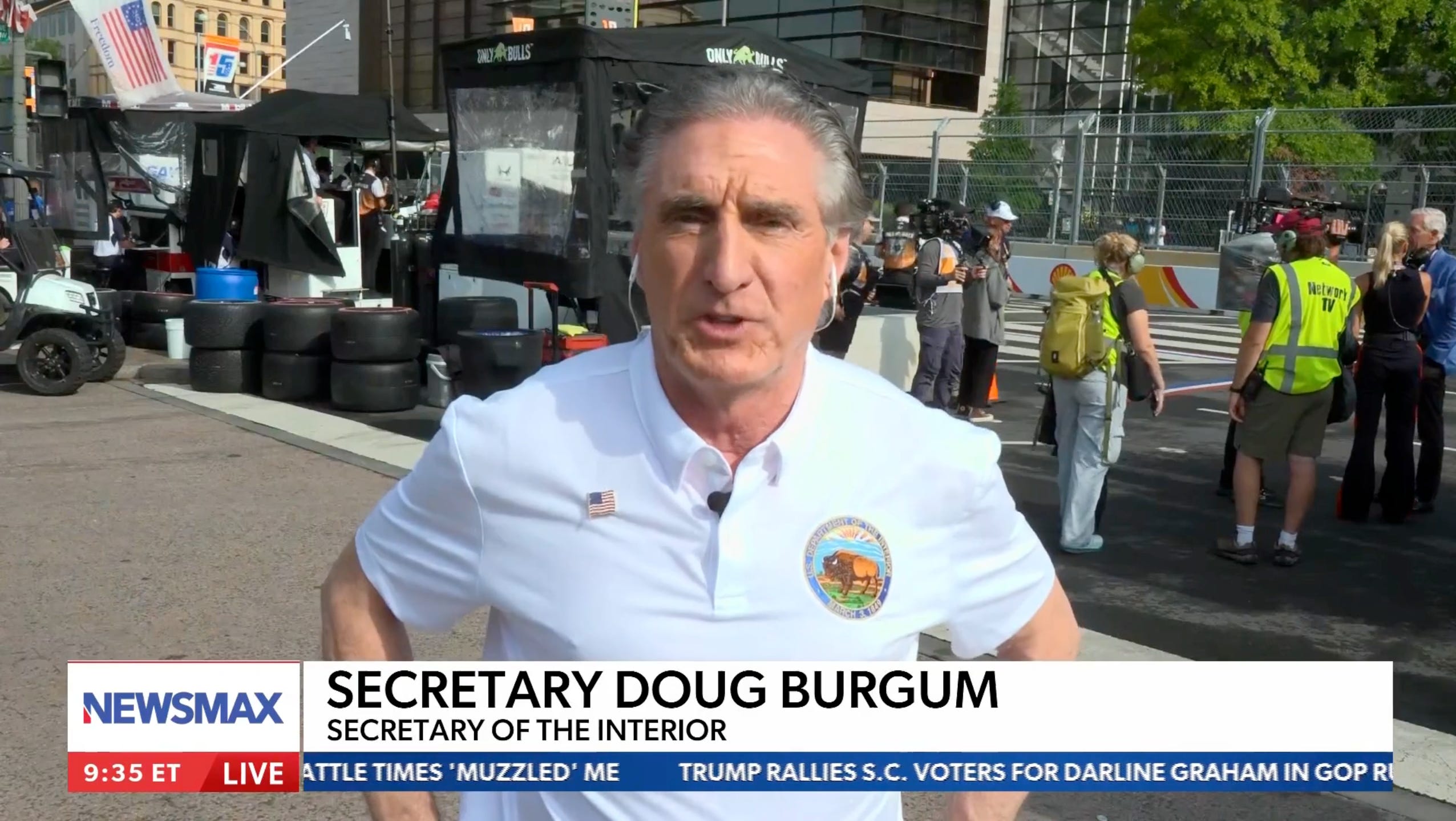
In a recent Newsmax interview, Interior Secretary Doug Burgum was asked about the backlash to the Trump administration’s attempt to shrink the boundaries of Bears Ears and Grand Staircase-Escalante national monuments in Utah. Burgum’s answer, just under two minutes long, contained a number of inaccurate or misleading statements. Let’s pull them out and correct them one by one:
1. “I think the largest one Theodore Roosevelt did was 7,000 acres.”
False. Burgum incorrectly suggested that the largest national monument designated by President Theodore Roosevelt was 7,000 acres in size. Perhaps Burgum should have done some research at the Theodore Roosevelt Presidential Library, a pet project of his, when he was there at the opening. According to the Roosevelt library, the largest national monument designated by Roosevelt was Grand Canyon National Monument, at 800,000 acres. It was later designated by Congress as a national park in 1919. Other national monuments over 7,000 acres designated by Roosevelt: Mount Olympus (600,000 acres), Petrified Forest (60,000 acres), and Chaco Canyon (over 20,000 acres).
2. “The specific enacting language, which has never changed, says that the monument shall be the smallest possible acreage to protect the objects. Objects means like Indiana Jones architectural items.”
False. Burgum is leaning on an argument the anti-monument crowd has tried, and failed, to make for over a century—that the Antiquities Act is intended to protect only the type of artifacts that would be housed in a museum. However, the specific enacting language of the Antiquities Act says, among other things, “historic landmarks, historic and prehistoric structures, and other objects of historic or scientific interest.” The Supreme Court has considered and rejected the artifacts-only reading of this language multiple times. Cameron v. United States (1920) upheld Roosevelt’s roughly 800,000-acre Grand Canyon monument as an object of “unusual scientific interest.” Cappaert v. United States (1976) upheld a monument protecting Devil’s Hole, a pool of water containing endangered pupfish.
Roosevelt didn’t subscribe to the Indiana Jones interpretation either. According to the Roosevelt library, “Critics argued that monuments should be limited to archaeological sites. But Roosevelt understood that geological formations qualified as ‘objects of scientific interest.’” Presidents from both parties have followed Roosevelt’s example for over a century, protecting landscapes of historic and scientific interest for future generations to learn from and enjoy.
3. “This was applied effectively all the way up till the Clinton administration.”
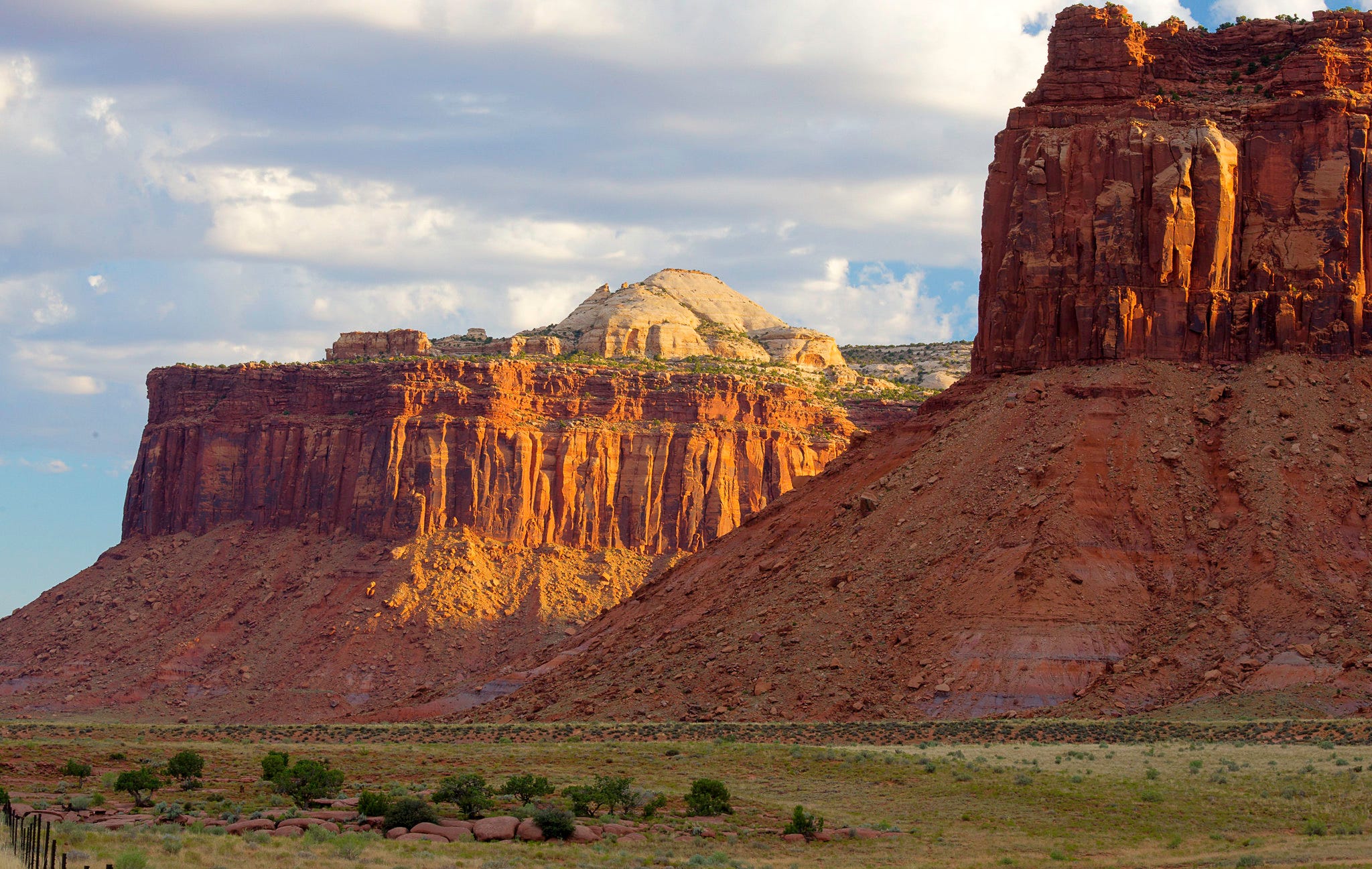
False. Burgum is trying to claim that presidents did not designate relatively large national monuments until the Clinton administration. But large monuments had been designated by presidents of both parties for nearly 90 years before Clinton took office, starting with Roosevelt’s 800,000-acre Grand Canyon National Monument designation in 1907. Other national monuments of over one million acres, designated by presidents from both political parties prior to the Clinton administration, include:
Katmai, designated by President Woodrow Wilson in 1918 - 1,088,000 acres
Glacier Bay, designated by President Calvin Coolidge in 1925 - 1,379,316 acres
Death Valley, designated by President Herbert Hoover in 1933 - 1,601,800 acres
Wrangell-St. Elias, designated by President Jimmy Carter in 1978 - 10,950,000 acres
4. “No support from the local people in Utah... people cheering it on that don’t live in Utah that are the extreme environmentalists.”
False. Burgum is asserting that national monuments in Utah lack public support within Utah. In poll after poll, year after year, Utahns consistently and overwhelmingly express strong support for national public lands in general and national monuments in particular, including Bears Ears and Grand Staircase-Escalante. This includes polling from 2017, 2024, and 2026, to cite just a few examples. Public comments on proposed national monuments reductions in 2017 were 99 percent in support of keeping the larger national monument boundaries. The designation of Bears Ears was originally proposed by the Bears Ears Inter-Tribal Coalition, which consists of five Tribes in Utah, making this a locally-driven effort to conserve the area protected by the national monument.
5. “Include ranching... they overlay it and basically say, ‘Stop! You can’t do this anymore.’”
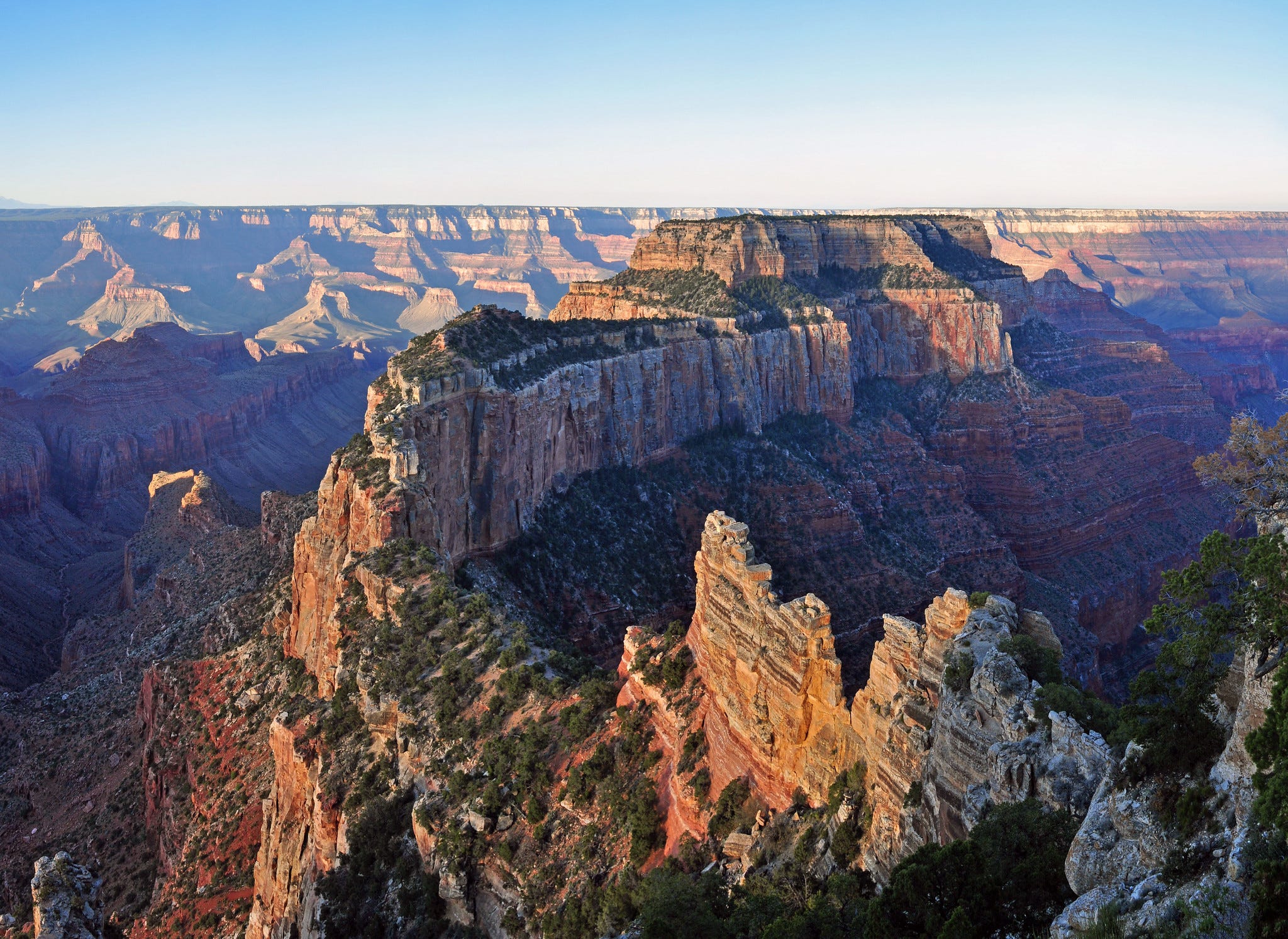
False. Burgum is claiming that ranching and other existing uses are eliminated with the designation of a national monument. In fact, ranching is allowed in Grand Staircase-Escalante National Monument, as specified by President Bill Clinton in his 1996 proclamation. Since the monument was designated, grazing has remained virtually unchanged. This is also true for grazing in Bears Ears National Monument.
6. “It kills local communities, kills the state’s economy.”
False. Economic studies have shown that national monument designations have positive impacts on local economies. Looking at Garfield and Kane counties in Utah, home to Grand Staircase-Escalante National Monument, jobs increased 51 percent from 2001 to 2022, while population grew 26 percent and per capita income increased 41 percent. Similar analyses of other gateway communities reach the same conclusion: national monuments and other protected public lands are good for local communities and economies.
For more information, visit westernpriorities.org. Sign up for Look West to get daily public lands and energy news sent to your inbox, or subscribe to our podcast, The Landscape.
The lies come faster than the list of symptoms in a drug commercial .
He,rollins, pearce, and zeldin need to be investigated