

The "too big" myth: Utah's case against Bears Ears and Grand Staircase collapses under 120 years of history
The "too big" myth Utah leaders are peddling doesn't stand up to legal or historical scrutiny

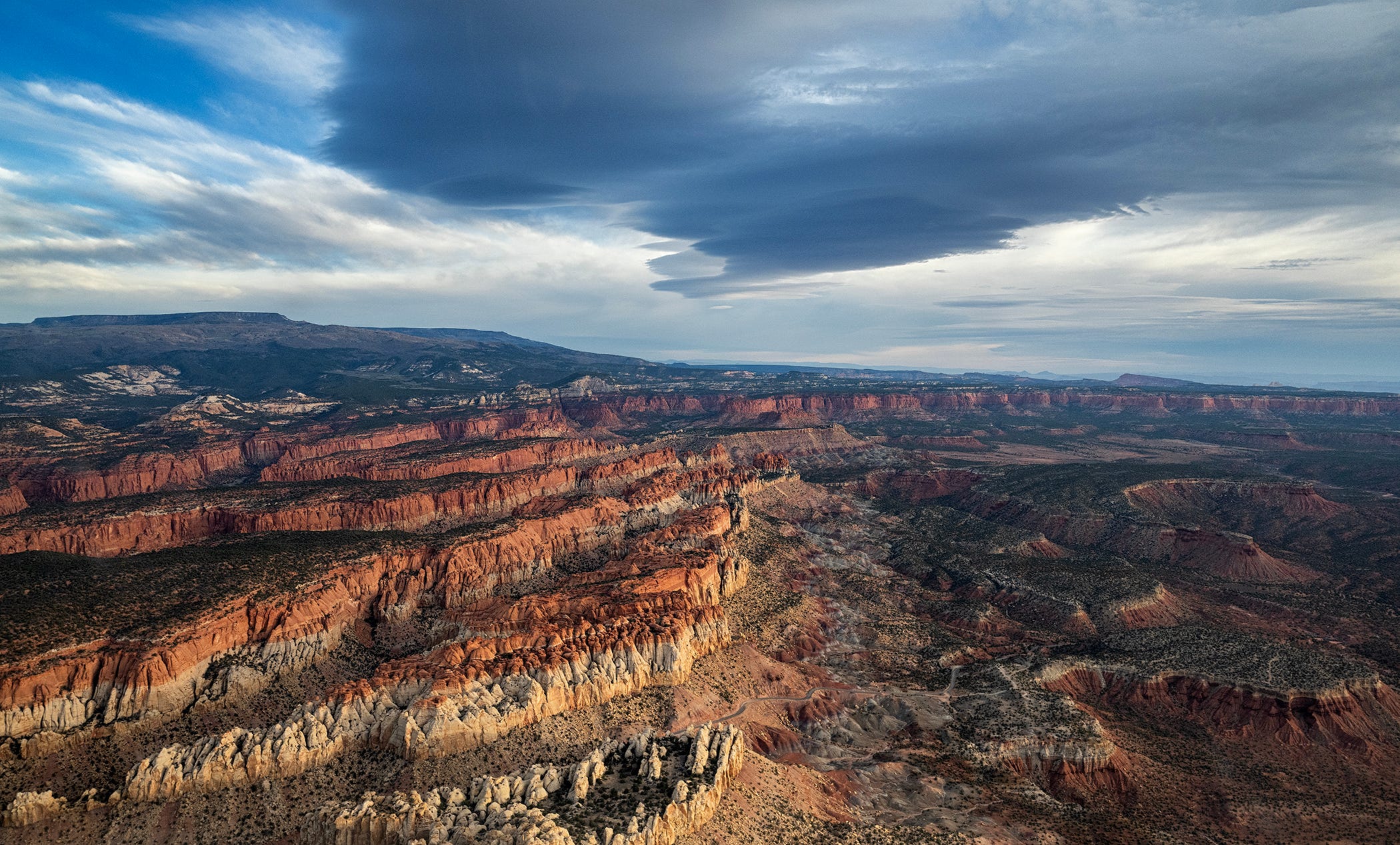
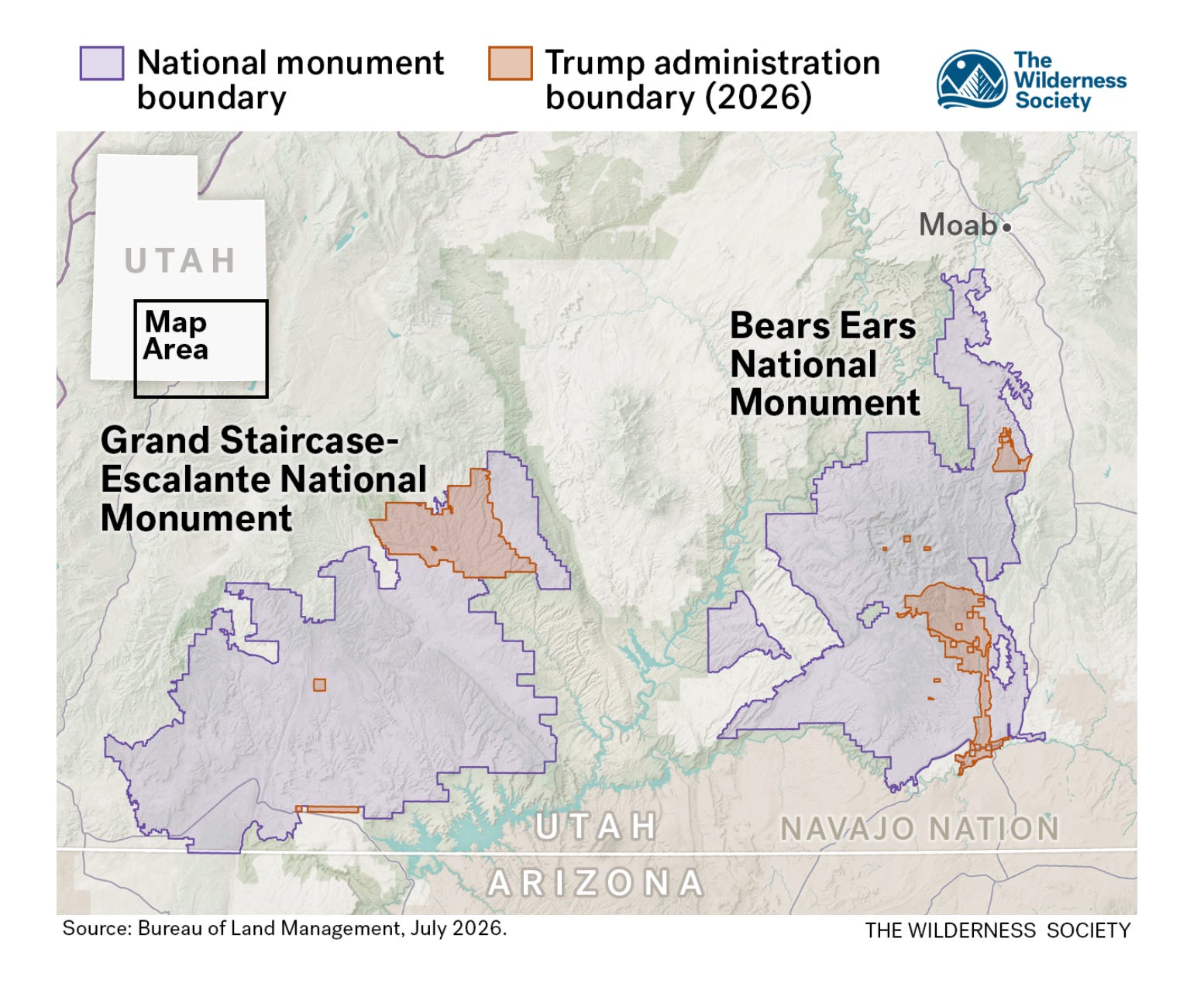
On July 13, President Donald Trump signed two proclamations slashing Bears Ears and Grand Staircase-Escalante national monuments by roughly 3 million acres in total, cutting each by about 90 percent. Bears Ears shrank from 1.36 million acres to 121,000; Grand Staircase-Escalante fell from 1.87 million acres to 182,000. Utah’s congressional delegation, governor, and legislative leaders lined up to applaud the cuts, resting their case on one main claim: the monuments were simply too big.
“The Antiquities Act was never meant to be a tool for locking up millions of acres with the stroke of a pen,” Attorney General Derek Brown said in the state’s press release. Governor Spencer Cox framed it as a matter of stewardship, insisting “the question has never been whether to protect them, but how to protect them best.” As justification, the delegation pointed to a part of the law that says monuments must occupy “the smallest area compatible” with protecting the objects inside them.
Their argument is tidy. But it’s contradicted by 120 years of legal precedent, history, and the author of the Antiquities Act himself.
The Act was built for landscapes
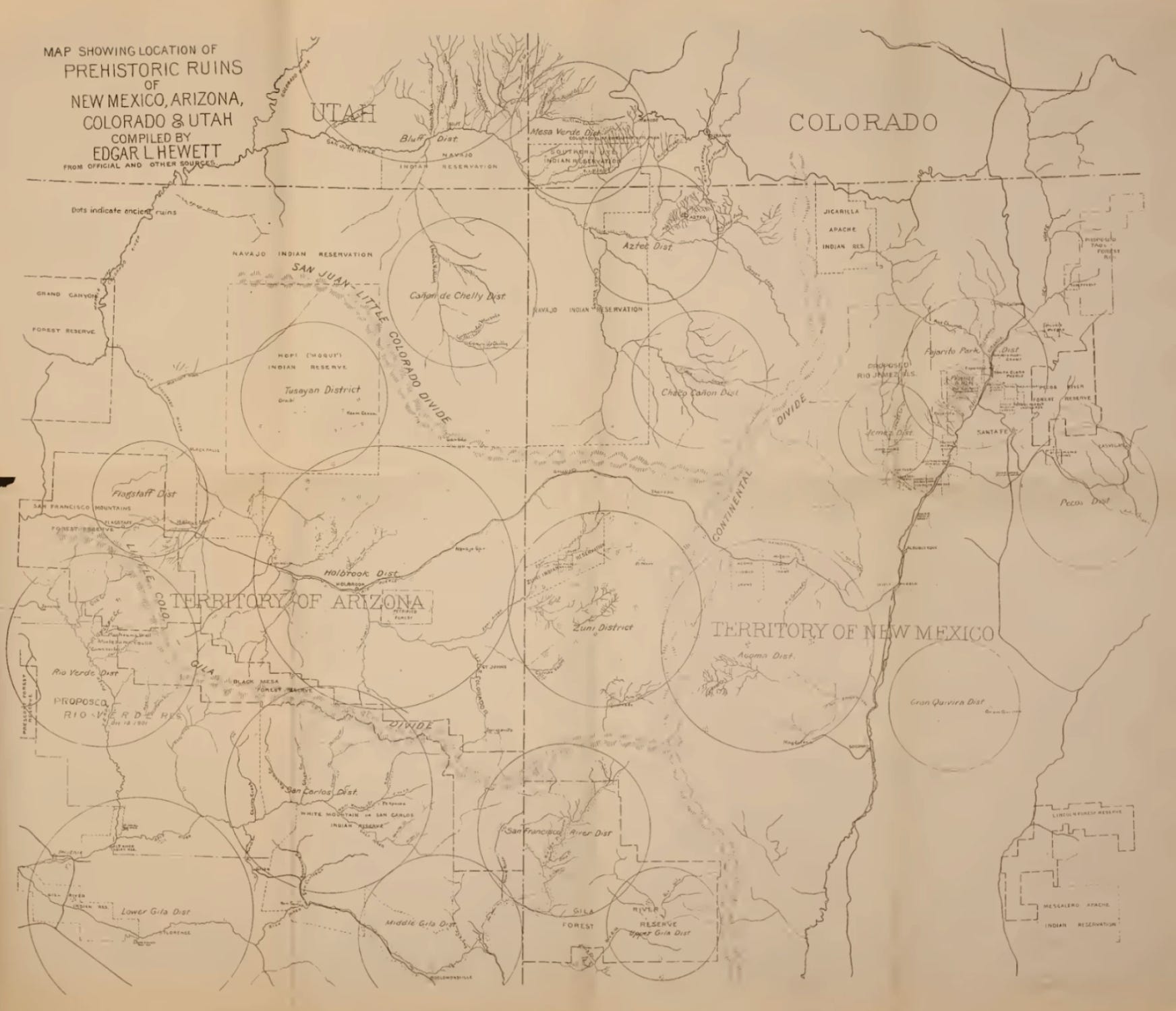
The 1906 Antiquities Act was drafted by archaeologist Edgar Lee Hewett, who two years earlier had mapped potential monuments across the Southwest. One of the dots on his map was the “Bluff District” of southeast Utah, the heart of what is now Bears Ears.
Early drafts of the Act did include acreage caps, but they were stripped out before passage. The law Congress enacted instead gave presidents full discretion to decide how big a monument should be to protect “objects of historic or scientific interest” inside it. The law’s chief sponsor even submitted Hewett’s monument suggestions to Congress in 1906. Those proposals were, in many cases, large landscapes. Hewett’s “Bluff District” proposal covered a huge swath of San Juan County, roughly the footprint of the original Bears Ears monument when it was designated in 2016.
President Teddy Roosevelt, who signed the Act into law, continued to think big. In 1908, Theodore Roosevelt protected more than 800,000 acres at the Grand Canyon, declaring it “an object of unusual scientific interest.” A year later he set aside over 600,000 acres as Mount Olympus National Monument. Congress affirmed those boundaries, eventually turning them both into national parks.
The courts have already rejected Utah’s argument
Pointing to the “smallest area” clause is not a new argument. The concept has been litigated for a century, and it keeps losing.
In the early 1900s, a miner argued Roosevelt’s Grand Canyon monument was too large. The Supreme Court rejected this claim unanimously in 1920. Justice Willis Van Devanter wrote that the canyon plainly qualified as a protectable object of scientific interest. Courts have since upheld the 221,610-acre Jackson Hole monument and Jimmy Carter’s Alaska monuments, which total nearly 20 million acres together. As John Ruple, a law professor at the University of Utah, told KUER: “It’s the president’s discretion of what those objects are and what that scale is. And no court has ever disturbed a president’s conclusion on those grounds.”
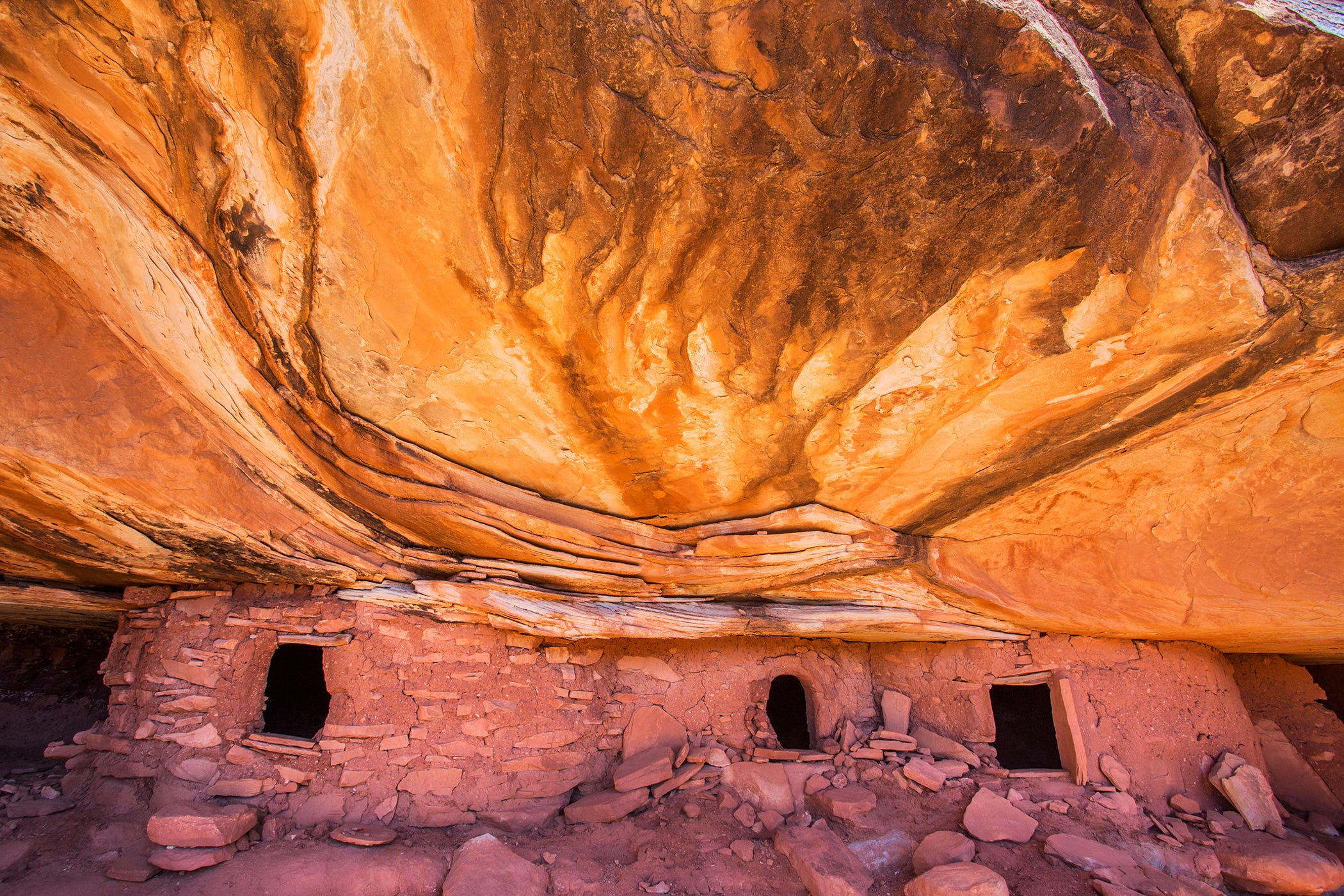
The Supreme Court has twice ruled that landscapes and ecosystems themselves are “objects,” including the Grand Canyon and a rare fish habitat in Death Valley. That matters for Bears Ears, where the value is not just scattered cliff dwellings and petroglyphs, but also the lands between them. “We can only see them at the landscape scale,” said BYU archaeologist Jim Allison, describing patterns of ancient settlement visible across the region’s estimated 100,000 cultural sites.
Utah has already brought this exact argument to court and lost. After President Bill Clinton designated the 1.7-million-acre Grand Staircase-Escalante monument in 1996, the Utah Association of Counties sued, claiming the Antiquities Act was unconstitutional and that, even if it was not, Clinton had blown past the “smallest area” limit. The federal district court in Utah dismissed the case in a lengthy and crushing decision in 2004.
Chief Judge Dee Benson found the president had met the law’s only two requirements, designating objects of scientific or historic value and setting aside the land required, at his discretion, to protect them. “With little additional discussion, these facts compel a finding in favor of the President’s actions in creating the monument. That is essentially the end of the legal analysis,” he wrote, adding that “when the President is given such a broad grant of discretion as in the Antiquities Act, the courts have no authority to determine whether the President abused his discretion.”
In August 2022, the state once again sued the federal government over monument size: this time over President Joe Biden’s 2021 proclamations restoring Bears Ears to 1.36 million acres and Grand Staircase-Escalante to 1.87 million acres after Trump’s first-term reductions. Procedurally, the case was dismissed, then revived by a federal appeals court, which reversed that dismissal in late June, sending it back to district court. Now that the monuments have once again been shrunk that case is likely moot, according to reporting in the Salt Lake Tribune.
Not big enough
While Utah’s leaders may think Bears Ears and Grand Staircase are too big, past proposals to protect Utah’s vast geologic and cultural landscapes went further. In the 1930s, Interior Secretary Harold Ickes proposed a 4-million-acre “Escalante National Monument” sprawling across southern Utah, an area larger than the two current monuments combined even before Trump’s cuts. Franklin Roosevelt, who was president at the time, never signed it. Ickes settled for pushing a national recreation area instead. That also died in committee, thanks to ranchers and the proto-Sagebrush Rebels, who objected to federal protection of land they grazed, despite the fact that grazing is allowed within national monuments and recreation areas.
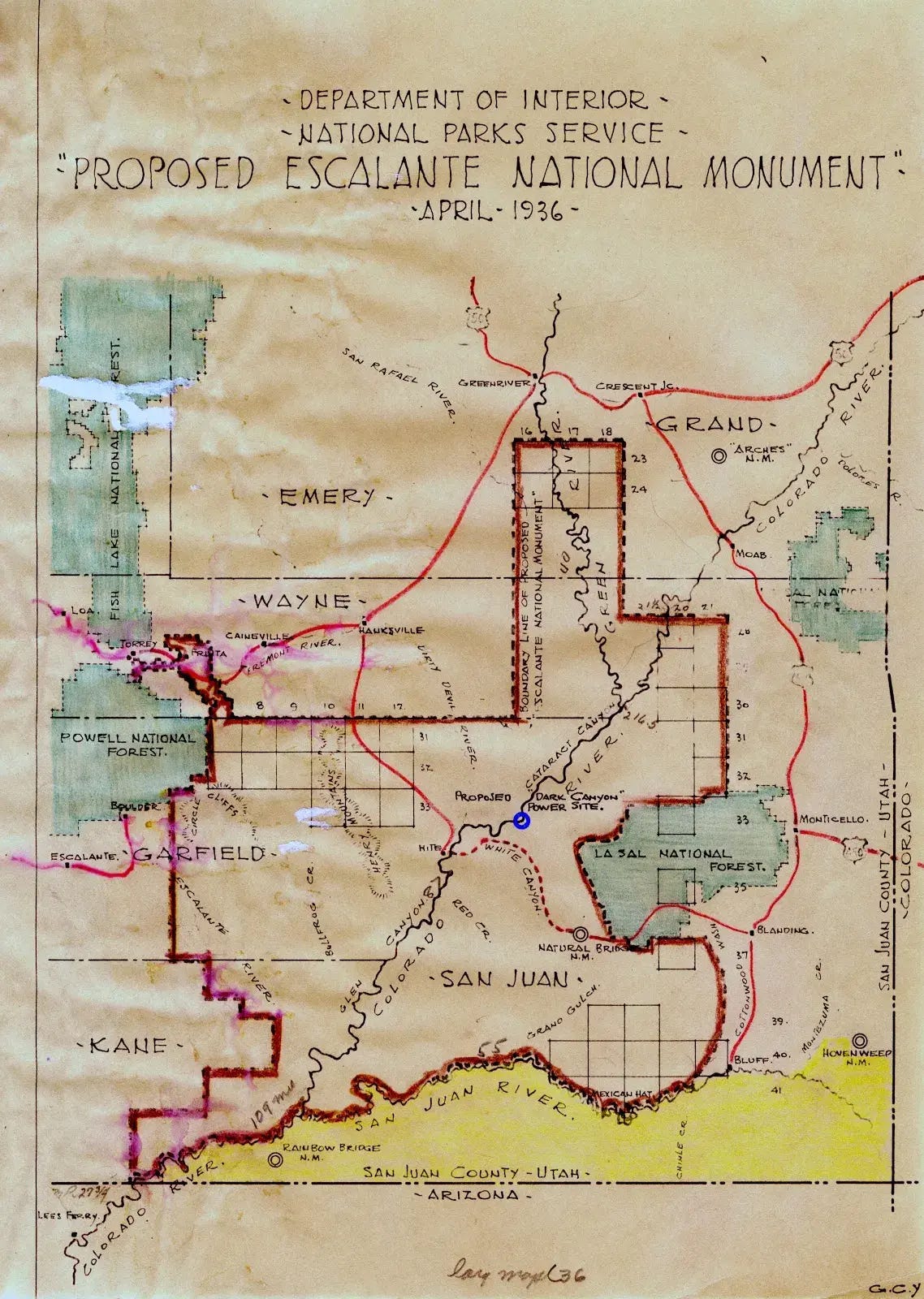
Much of Ickes’s proposed monument was later folded into Capitol Reef and Canyonlands national parks, and Glen Canyon National Recreation Area, places now treated as crown jewels by the state of Utah itself. What lingered were the gaps, including the Bears Ears region, which waited another 80 years for protection. This history further proves that today’s “too big” complaint is not a modern reaction to executive overreach. It is the same argument that stalled conservation in canyon country nearly a century ago. But it hasn’t stopped conservation from moving forward. Today, much of the land in Ickes grand proposal is now protected, proving he was on the right side of history even if his contemporaries didn’t see it that way.
Congress had its chance to set a limit
In addition to the courts, Congress has weighed in on the lack of size limits in the Antiquities Act twice. First, when it passed the original law and again when it passed the Federal Land Policy and Management Act of 1976. That law, which is the legal foundation of public land management today, repealed or curbed presidential powers over public lands and required congressional review for withdrawals of 5,000 acres or more. Yet it notably left the Antiquities Act intact, preserving the president’s authority to proclaim monuments with no acreage limit. The same statute confirmed that only Congress, not a future president, may shrink or abolish a monument once it is created.
Legal scholars call this an “asymmetrical delegation.” The Act gives the president power to create monuments but says nothing about undoing them, and that silence, according to a recent academic analysis, means the power to alter or shrink a monument belongs to Congress alone. The same analysis directly rebuts a Trump Justice Department legal opinion published last year that argues presidents can alter monuments, which reversed the federal government’s own position on this matter dating back to 1938.
Out of step at home
The delegation also claims to speak for locals. Yet polling shows 74 percent of Utah voters support keeping all of Grand Staircase-Escalante protected and 71 percent support the same for Bears Ears. Both monuments are currently supported by Tribal nations and local coalitions.
Conservation groups and Tribes are already headed to court over the cuts, and if history is any guide, the “too big” argument will fare no better this time than it has for the last hundred years.
For more information, visit westernpriorities.org. Sign up for Look West to get daily public lands and energy news sent to your inbox, or subscribe to our podcast, The Landscape.
Great piece, Kate! Spot on per usual.
Well stated. We Westerners hold the lands sacred! We vote, we watch & we’re listening. We did not vote for the loss of our
National/ Public lands for Commodity purposes by the Trump Administration! We are NOT happy!